Vedas and Upanishads
A question, a chariot and a pinch of salt
एक प्रश्न, एक रथ और चुटकी भर नमक
Upanishadic teachers often start with something recognizable. A family promise, a moving chariot or a bowl of water leads readers toward a question about knowledge or the self.
Nachiketa asks again
In the Katha Upanishad, Nachiketa comes before Yama, who grants him three boons. He uses the last to ask what happens when a person dies. Yama offers other rewards, but the boy stays with the question. The passage gives a family reader a way to discuss why some questions matter enough to take time over.
- RiderThe self
- ChariotThe body
- Driver and reinsIntellect and mind
- HorsesThe senses
What the chariot represents
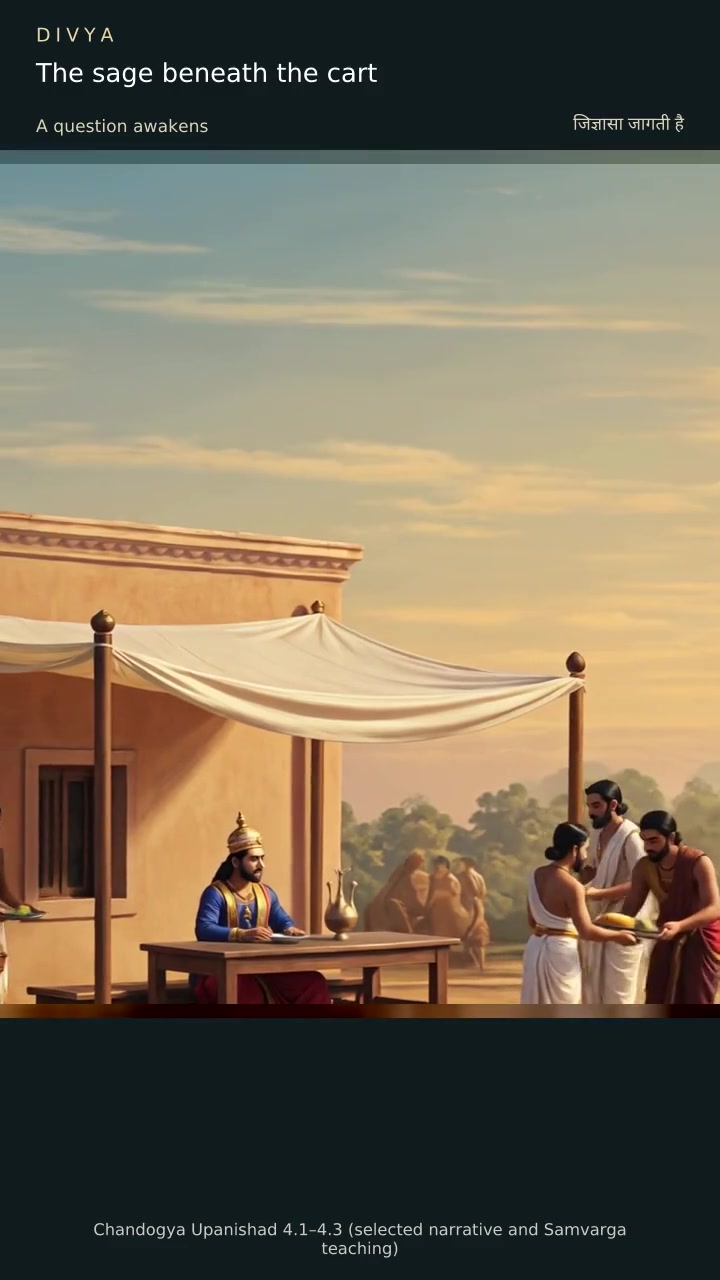
A later passage compares the body to a chariot, the senses to horses, the mind to reins, and the intellect to the driver. The self is the rider. The image lets a reader imagine what happens when the horses pull in different directions or the reins are poorly held. It is an analogy for attention and discernment within the teaching, with different interpretations across traditions.
Shvetaketu looks for the salt
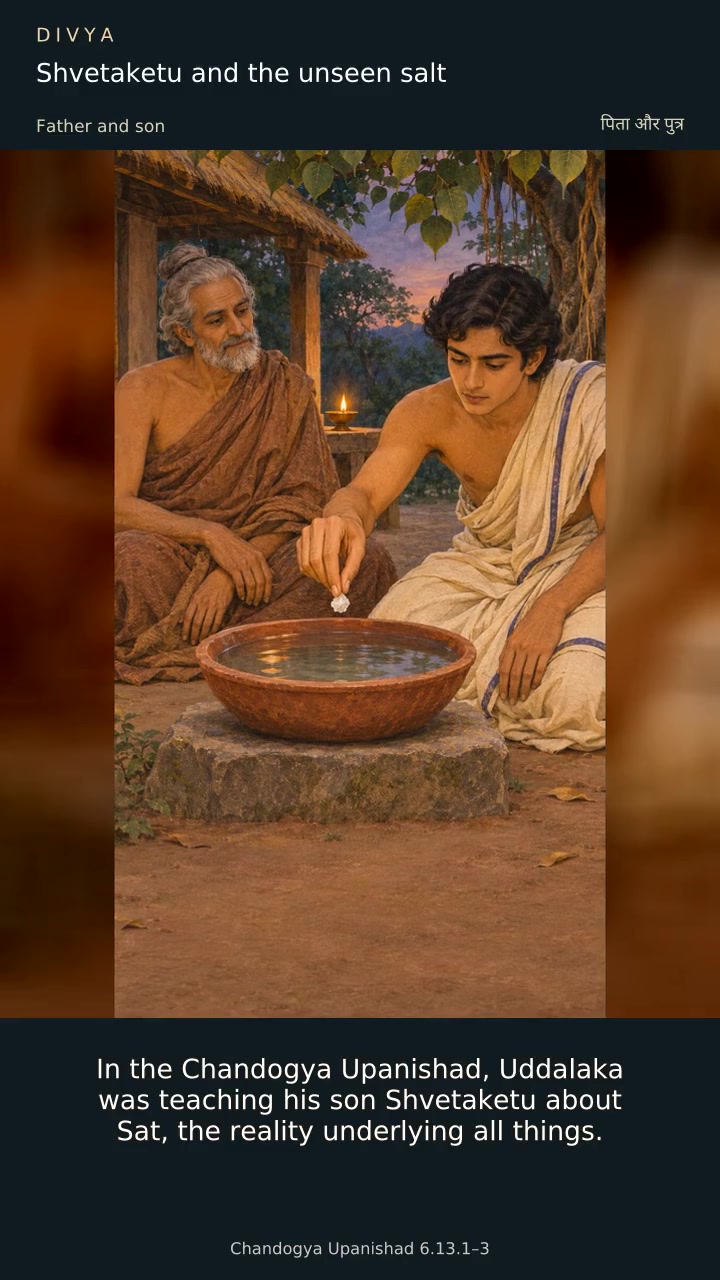
In the Chandogya Upanishad, Uddalaka asks Shvetaketu to dissolve salt in water and taste it from different places. The salt is no longer visible, but the taste is present throughout. This everyday observation supports the teacher’s explanation of an underlying reality. A family can try the water demonstration at home and then discuss where the analogy helps and where it stops carrying the argument.
- Start with a question
- Look at a familiar example
- Ask what the example represents
- Discuss what you still want to understand
हिन्दी में सारांश
नचिकेता यम से कठिन प्रश्न पूछते हैं। रथ की उपमा शरीर, इन्द्रियों, मन और बुद्धि को समझाती है। श्वेतकेतु पानी में घुले नमक से उस बात पर विचार करते हैं जो दिखती नहीं, पर अनुभव में आती है।
Take it further
A familiar example can open a hard question. Ask what it shows before drawing a conclusion.
Talk about it. How would you explain the chariot analogy using a situation from your own day?