The situation
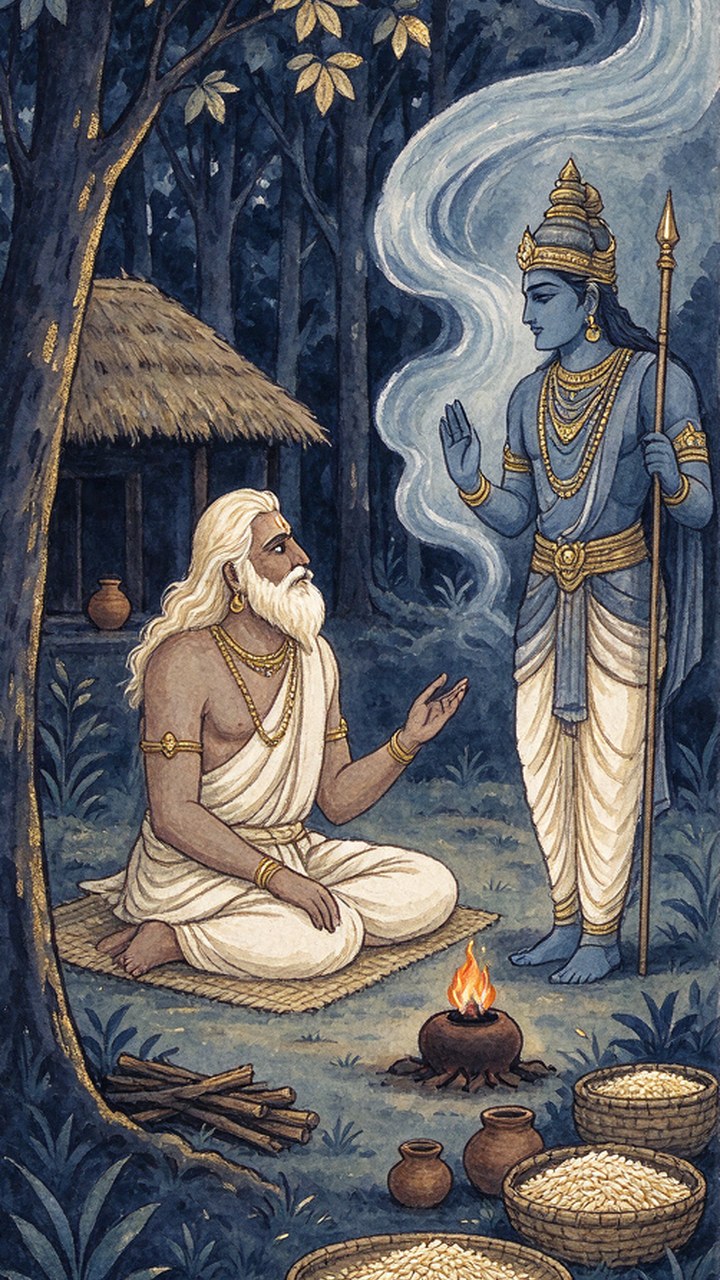
Bhrigu approached his father Varuna and asked to be taught Brahman. Varuna pointed him toward food, breath, sight, hearing, mind, and speech. He gave him a guiding inquiry: seek that from which beings arise, by which they are sustained, and into which they return.
What happens
Bhrigu undertook tapas, a sustained discipline of contemplation. He first understood food as Brahman, considering how beings arise through nourishment, live by it, and return to it. Then he approached Varuna again and asked for further teaching. His father directed him back to tapas.
The inquiry continued through life-breath, mind, and understanding. After each recognition, Bhrigu returned to his father, and each time Varuna urged him to pursue Brahman through tapas. The repeated instruction accompanied the son as he carried his inquiry further.
How this episode ends
At last Bhrigu understood bliss as Brahman: beings arise from bliss, live through bliss, and return to bliss. The passage names this the knowledge of Bhrigu and Varuna. Its account of learning joins the father’s guidance with the son’s repeated, attentive inquiry.
हिन्दी में पूरी कथा और सीख पढ़ें
प्रसंग की शुरुआत
भृगु अपने पिता वरुण के पास गए और उनसे ब्रह्म का ज्ञान माँगा। वरुण ने अन्न, प्राण, देखने-सुनने की शक्ति, मन और वाणी की ओर उनका ध्यान दिलाया। उन्होंने खोज का आधार दिया: उसे जानने का प्रयत्न करो जिससे प्राणी उत्पन्न होते हैं, जिसके सहारे जीते हैं और जिसमें लौटते हैं।
घटनाक्रम
भृगु ने तप किया, अर्थात एकाग्र चिंतन और साधना में लगे। पहले उन्होंने अन्न को ब्रह्म जाना, यह विचार करते हुए कि प्राणी पोषण से उत्पन्न होते हैं, उससे जीते हैं और उसी में लौटते हैं। फिर वे पिता के पास गए और आगे की शिक्षा माँगी। वरुण ने उन्हें फिर तप की ओर भेजा।
खोज प्राण, मन और समझ के माध्यम से आगे बढ़ी। प्रत्येक बोध के बाद भृगु फिर पिता के पास गए। हर बार वरुण ने तप के द्वारा ब्रह्म को जानने का निर्देश दिया। पिता की वही शिक्षा पुत्र की आगे बढ़ती जिज्ञासा के साथ रही।
इस प्रसंग का परिणाम
अंत में भृगु ने आनन्द को ब्रह्म जाना: प्राणी आनन्द से उत्पन्न होते हैं, उससे जीते हैं और उसी में लौटते हैं। उपनिषद इस ज्ञान को भृगु और वरुण की विद्या कहता है। सीखने के इस क्रम में पिता का मार्गदर्शन और पुत्र की बार-बार की गई एकाग्र खोज साथ दिखाई देते हैं।
कथा की सीख / विचार
निरंतर खोज से प्रारम्भिक समझ गहरी हो सकती है। एक शिक्षक हमें ऐसा प्रश्न देकर सहायता कर सकता है जिस पर बार-बार लौटना सार्थक हो।