The hymn begins
These selected verses address Earth as sacred mother and sustaining ground. The hymn begins by naming truth, order, consecration, spiritual fervour, and sacrifice among what supports her. It asks for a broad place to dwell upon the Earth that holds past and future.
Images and questions
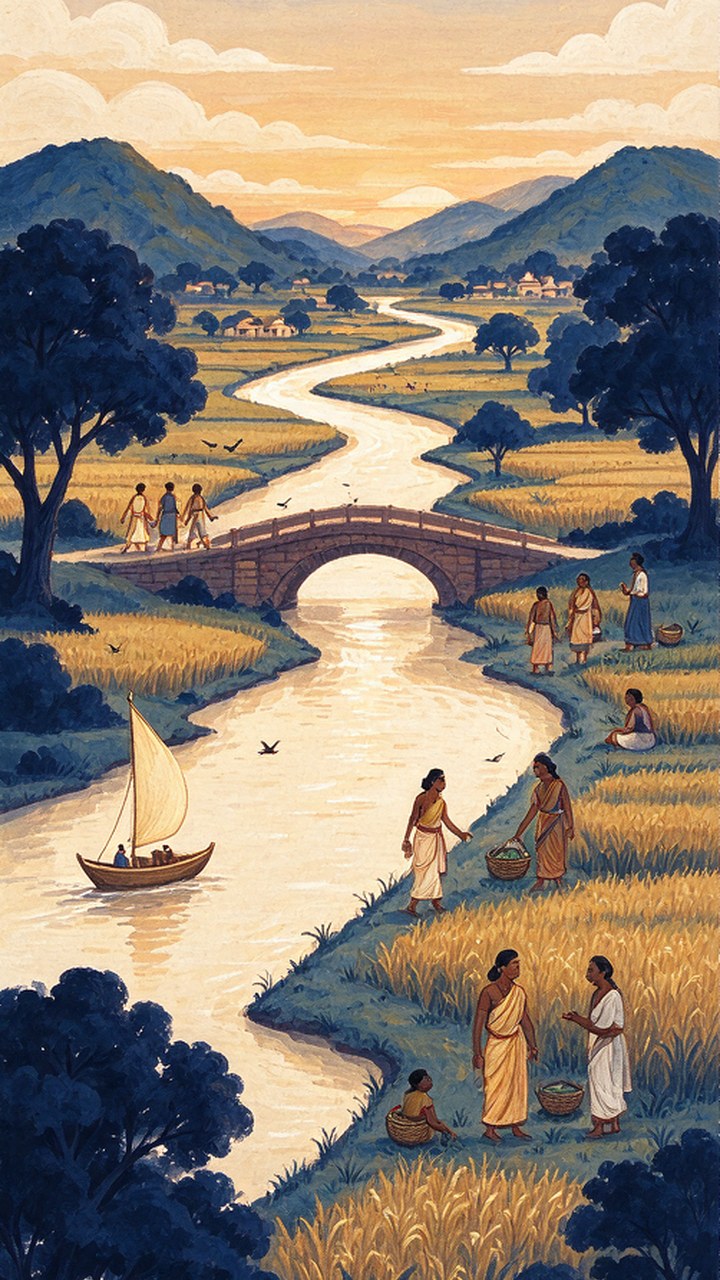
She bears heights and plains, plants, seas, rivers, food, and human communities. The speaker turns toward her snowy mountains and forests, seeking their kindness. He names Earth as his mother and himself as her son, placing his own life within this sustaining relationship.
The prayer also attends to the act of digging. Whatever he digs from Earth, the speaker asks, may it grow again quickly. May the digging avoid her vital places and her heart. Need and a wish to avoid injury appear together in this address.
Where the passage leaves us
Another verse recognizes people of varied languages and customs whom Earth supports in their dwellings. It asks her for abundant prosperity, using the image of a dependable nourishing cow. The selected verses move between gratitude, belonging, practical need, and prayerful care.
हिन्दी में पूरी कथा और सीख पढ़ें
सूक्त का आरम्भ
इन चुनी हुई ऋचाओं में पृथ्वी को पवित्र माता और जीवन के आधार के रूप में संबोधित किया गया है। सूक्त आरंभ में सत्य, ऋत, दीक्षा, तपस् और यज्ञ को उसे धारण करने वाली शक्तियों में गिनता है। भूत और भविष्य को सँभालने वाली पृथ्वी से रहने के लिए विस्तृत स्थान माँगा जाता है।
विचार और बिंब
वह ऊँचाइयों और मैदानों, वनस्पतियों, समुद्रों, नदियों, अन्न और मानव समुदायों को धारण करती है। वक्ता उसके हिमाच्छादित पर्वतों और वनों की ओर उनकी अनुकूलता की कामना से मुड़ता है। वह पृथ्वी को अपनी माता और स्वयं को उसका पुत्र कहकर अपने जीवन को इस पोषक संबंध में रखता है।
प्रार्थना भूमि खोदने के कार्य पर भी ध्यान देती है। पृथ्वी से जो कुछ निकाला जाए, वक्ता चाहता है कि वह शीघ्र फिर उग आए। खोदने से उसके मर्म और हृदय को चोट न पहुँचे। इस संबोधन में आवश्यकता और आघात से बचने की इच्छा साथ उपस्थित हैं।
पाठ का अंतिम संकेत
एक अन्य ऋचा उन लोगों को पहचानती है जिनकी भाषाएँ और रीति-रिवाज अलग हैं और जिन्हें पृथ्वी उनके निवासों में धारण करती है। भरोसेमंद दूध देने वाली गाय के बिम्ब से उससे भरपूर समृद्धि माँगी जाती है। चुनी हुई ऋचाएँ कृतज्ञता, अपनेपन, व्यावहारिक आवश्यकता और प्रार्थनापूर्ण देखभाल के बीच चलती हैं।
कथा की सीख / विचार
ये ऋचाएँ आज भूमि और हमसे अलग भाषा बोलने वाले लोगों की देखभाल की प्रेरणा दे सकती हैं। यह आज का हमारा अनुप्रयोग है; मूल ऋचाएँ वैदिक प्रार्थना के अपने संदर्भ में स्थित हैं।