The situation
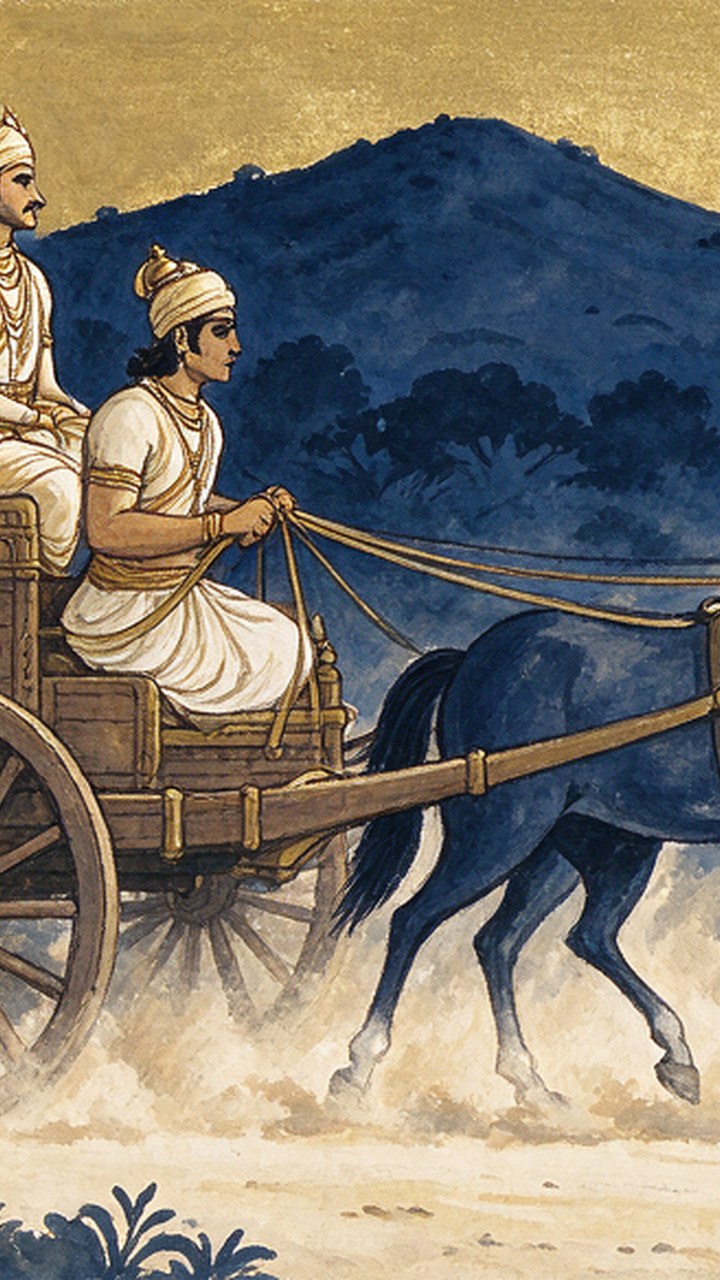
Yama asked Nachiketa to picture life as a journey in a chariot. The body is the vehicle and the Self the traveller within it.
What happens
The intellect acts as the driver, the mind as the reins and the senses as the horses. The things we perceive are the roads they travel.
If the reins are loose and the driver unskilled, the horses pull in many directions. Discernment and attention are needed to travel toward the intended destination.
How this episode ends
The teaching presents self-discipline as coordination, not hatred of the senses. Its purpose is to understand how judgment, attention and action belong together.
हिन्दी में पूरी कथा और सीख पढ़ें
प्रसंग की शुरुआत
यम ने नचिकेता को जीवन की कल्पना रथ-यात्रा के रूप में करने को कहा। शरीर रथ है और आत्मा उसमें बैठा यात्री।
घटनाक्रम
बुद्धि सारथी है, मन लगाम है और इन्द्रियाँ घोड़े। इन्द्रियों के विषय रास्ते हैं।
लगाम ढीली हो और सारथी कुशल न हो, तो घोड़े अलग दिशाओं में भागते हैं। लक्ष्य तक पहुँचने के लिए विवेक और ध्यान आवश्यक हैं।
इस प्रसंग का परिणाम
इस उपमा में संयम इन्द्रियों से शत्रुता नहीं, बल्कि उनका समन्वय है। यह निर्णय, ध्यान और कर्म का संबंध समझाती है।
कथा की सीख / विचार
केवल गति नहीं, सही दिशा भी जरूरी है.