The situation
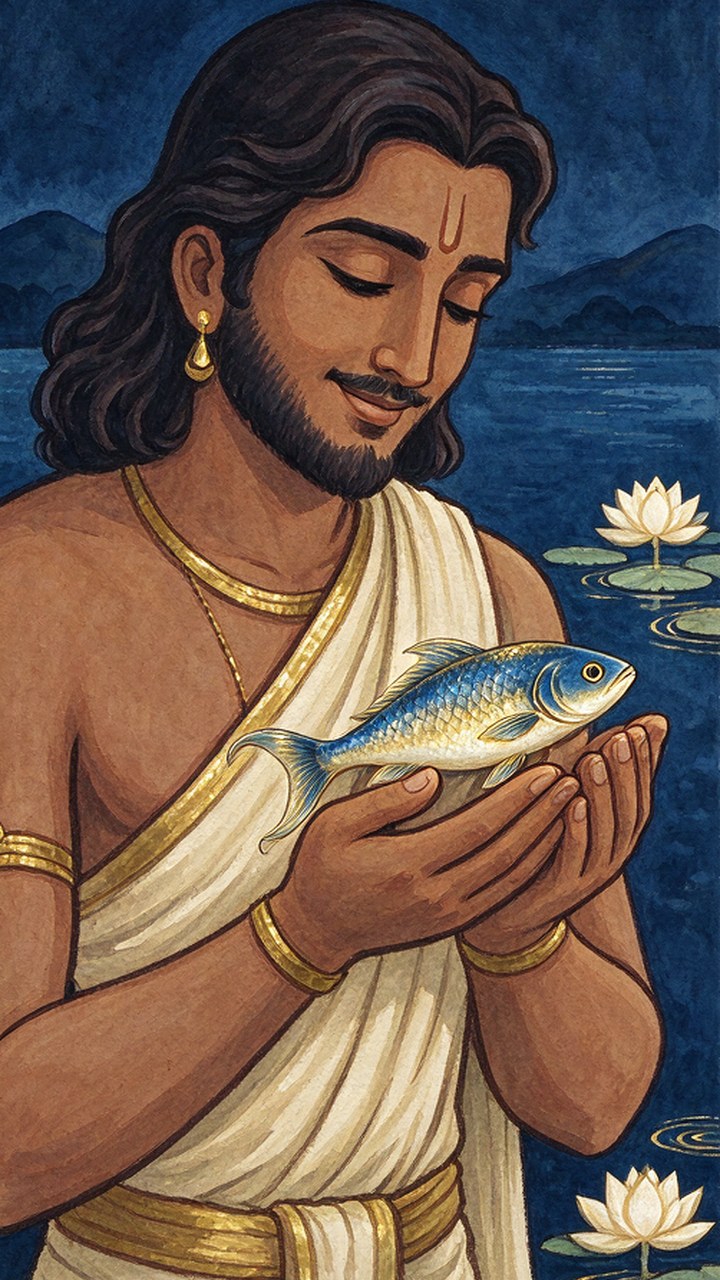
One morning, while Manu was washing with water brought to him, a small fish came into his hands. It asked him to raise and protect it, promising in return to save him from a flood that would sweep away living creatures.
What happens
The fish explained its danger: larger fish devoured smaller ones. Manu was to keep it first in a jar, then in a pit when it grew, and finally take it to the sea. He cared for it in this way as it became a great fish.
The fish named the year of the coming flood and instructed Manu to prepare a boat. When the waters rose, he entered it. The fish returned, and Manu tied the boat's rope to its horn. With its help, he reached a mountain in the north.
How this episode ends
There the fish told him to fasten the boat to a tree and descend gradually as the water receded. Manu followed the instruction. The passage calls that place Manu's descent and ends this part of the account with Manu alone remaining after the flood.
हिन्दी में पूरी कथा और सीख पढ़ें
प्रसंग की शुरुआत
एक सुबह मनु अपने लिए लाए गए जल से हाथ धो रहे थे। तभी एक छोटी मछली उनके हाथों में आ गई। उसने उनसे अपना पालन और संरक्षण करने को कहा तथा बदले में उस बाढ़ से बचाने का वचन दिया जो जीवों को बहा ले जाएगी।
घटनाक्रम
मछली ने अपना संकट समझाया: बड़ी मछलियाँ छोटी मछलियों को खा जाती हैं। मनु को उसे पहले घड़े में, बढ़ने पर खोदे हुए गड्ढे में और फिर समुद्र में ले जाना था। उन्होंने इसी तरह उसकी देखभाल की और वह एक बड़ी मछली बन गई।
मछली ने आने वाली बाढ़ का वर्ष बताया और मनु को नाव तैयार करने का निर्देश दिया। जब जल बढ़ा, वे नाव में चढ़ गए। मछली लौटकर आई और मनु ने नाव की रस्सी उसके सींग से बाँध दी। उसकी सहायता से वे उत्तर दिशा के एक पर्वत तक पहुँचे।
इस प्रसंग का परिणाम
वहाँ मछली ने नाव को एक वृक्ष से बाँधने और जल उतरने के साथ धीरे-धीरे नीचे आने को कहा। मनु ने निर्देश का पालन किया। पाठ उस स्थान को मनु का अवसर्पण, अर्थात उतरने का स्थान, कहता है और कथा का यह अंश बाढ़ के बाद अकेले मनु के बचे रहने पर समाप्त होता है।
कथा की सीख / विचार
यहाँ देखभाल एक असुरक्षित जीवन पर ध्यान देने से शुरू होती है और तैयारी तथा विश्वास में आगे बढ़ती है। इस ब्राह्मण ग्रंथ की कथा का अपना स्वरूप बनाए रखते हुए हम इस पारस्परिकता पर विचार कर सकते हैं।