The situation
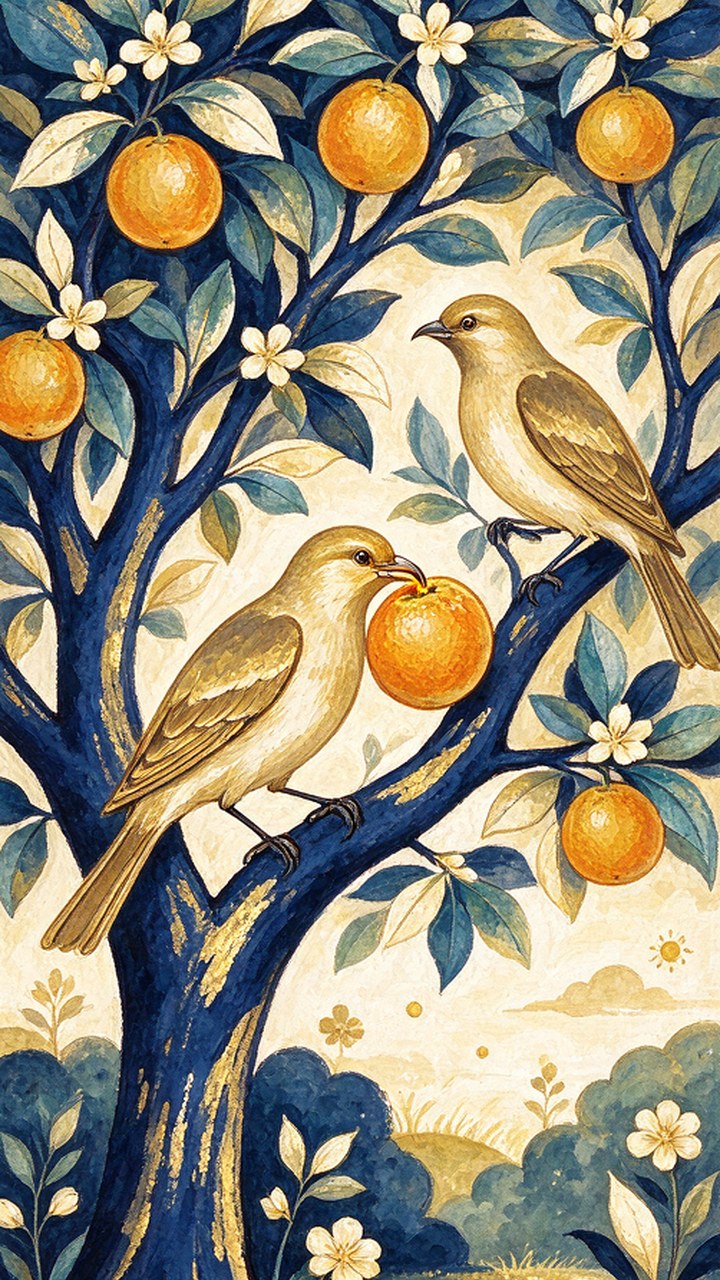
Two companion birds rest on one tree. The first eats fruit—sweet and bitter—while the second does not eat and only watches.
What happens
The text pictures the first as sorrowful and caught in its circumstances. Its situation changes when it turns toward its companion and recognises a greatness beyond its immediate experience.
Traditions often interpret these birds in terms of the individual and Supreme Self. They do not all agree on the exact relation between the two.
How this episode ends
The image asks us to consider the difference between a passing experience and the one aware of it; it is not a scientific diagram of the brain.
हिन्दी में पूरी कथा और सीख पढ़ें
प्रसंग की शुरुआत
एक ही वृक्ष पर दो पक्षी साथ बैठे हैं। एक मीठे-कड़वे फल खाता है, जबकि दूसरा शांत भाव से देखता है।
घटनाक्रम
मंत्र पहले पक्षी को अपने अनुभव में उलझा और दुःखी दिखाता है। दूसरे की ओर देखने पर उसे एक अलग महिमा का बोध होता है।
परंपराओं में इन्हें जीवात्मा और परमात्मा से जोड़ा जाता है, पर दोनों का संबंध अलग-अलग दर्शन अलग तरह से समझाते हैं।
इस प्रसंग का परिणाम
यह रूपक बदलते अनुभव और उसे जानने वाले के संबंध पर विचार कराता है। इसे मस्तिष्क का वैज्ञानिक चित्र नहीं मानना चाहिए।
कथा की सीख / विचार
कोई भावना वास्तविक हो सकती है, पर वही आपकी पूरी पहचान नहीं है.