The hymn begins
Vipash and Shutudri rush from the mountains toward the sea. The hymn compares them with eager mares and mothers tending their young. Vishvamitra approaches these powerful waters with his appeal; the Bharatas and their vehicles need a way across.
Images and questions
In the dialogue, the rivers answer that they follow the course prepared for them by the gods. Their movement cannot simply be abandoned. They recall how Indra broke the obstruction to their currents, and ask what the singer wants from them.
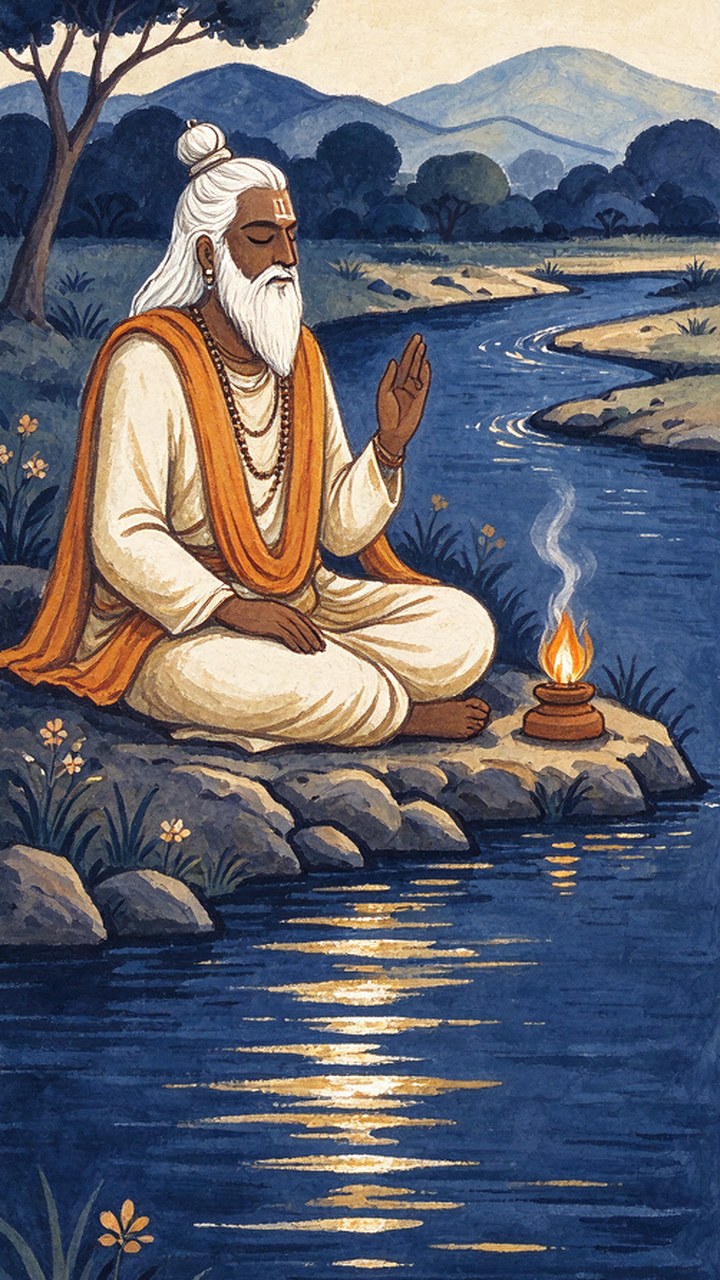
Vishvamitra addresses the rivers as sisters. He asks them to pause briefly and lower their waters beneath the axles of the approaching vehicles. The rivers ask that his words and future songs remember them with honour. They hear his request and consent to bend low.
Where the passage leaves us
The Bharatas cross, and the singer's prayer has found a response. He then calls for the rivers to swell and hurry onward again, filling their channels. The hymn keeps both movements in view: the travellers' passage and the waters' own continuing journey.
हिन्दी में पूरी कथा और सीख पढ़ें
सूक्त का आरम्भ
विपाश् और शुतुद्री पर्वतों से निकलकर समुद्र की ओर वेग से बहती हैं। सूक्त उनकी तुलना उत्सुक घोड़ियों और अपने बच्चों की देखभाल करती माताओं से करता है। विश्वामित्र इन प्रबल धाराओं के पास अपनी प्रार्थना लेकर आते हैं; भरतों और उनके वाहनों को पार जाने का मार्ग चाहिए।
विचार और बिंब
संवाद में नदियाँ उत्तर देती हैं कि वे देवताओं द्वारा निर्धारित मार्ग पर चलती हैं। उनका प्रवाह यूँ ही छोड़ा नहीं जा सकता। वे स्मरण करती हैं कि इन्द्र ने उनकी धाराओं का अवरोध तोड़ा था, और पूछती हैं कि ऋषि उनसे क्या चाहते हैं।
विश्वामित्र नदियों को बहनों की तरह संबोधित करते हैं। वे उनसे थोड़ी देर ठहरने और जल को आने वाले वाहनों की धुरियों से नीचे रखने की प्रार्थना करते हैं। नदियाँ चाहती हैं कि उनके शब्द और आगे के स्तुतिगान उनका सम्मान बनाए रखें। वे निवेदन सुनती हैं और झुकने को सहमत होती हैं।
पाठ का अंतिम संकेत
भरत पार पहुँचते हैं और ऋषि की प्रार्थना को उत्तर मिल जाता है। अब वे नदियों से फिर उमड़ने, अपने पाट भरने और आगे बहने को कहते हैं। सूक्त दोनों गतियों को साथ रखता है: यात्रियों का पार जाना और जलधाराओं की अपनी अनवरत यात्रा।
कथा की सीख / विचार
मार्ग माँगते समय उस प्रवाह का सम्मान भी किया जा सकता है जो हमारे चले जाने के बाद जारी रहेगा। यह कविता जीवित जगत के प्रति विनम्रता पर विचार करने का अवसर देती है।