Mahabharata Storyverse
महाभारत कथाविश्व
Follow one family from a disputed throne to exile, war, and the long work of healing. Explore tales told inside the epic, earlier lives that shape the conflict, and the generations who carry the story forward.
सिंहासन के विवाद से वनवास, युद्ध और उसके बाद सँभलने तक एक परिवार की कथा पढ़ें। महाकाव्य के भीतर सुनाई गई कथाएँ, पुराने प्रसंग और कथा आगे ले जाने वाली पीढ़ियाँ खोजें।
Main story in reading order
मुख्य कथा का क्रम
Follow the 12 numbered reading chapters from the beginning, or open any of the four comic collections for films and panels.
आरम्भ से 12 क्रमांकित अध्याय पढ़ें या चित्रकथा और फ़िल्मों के लिए चार में से कोई संग्रह खोलें।
-
The Kuru family and the throne
कुरु परिवार और सिंहासन
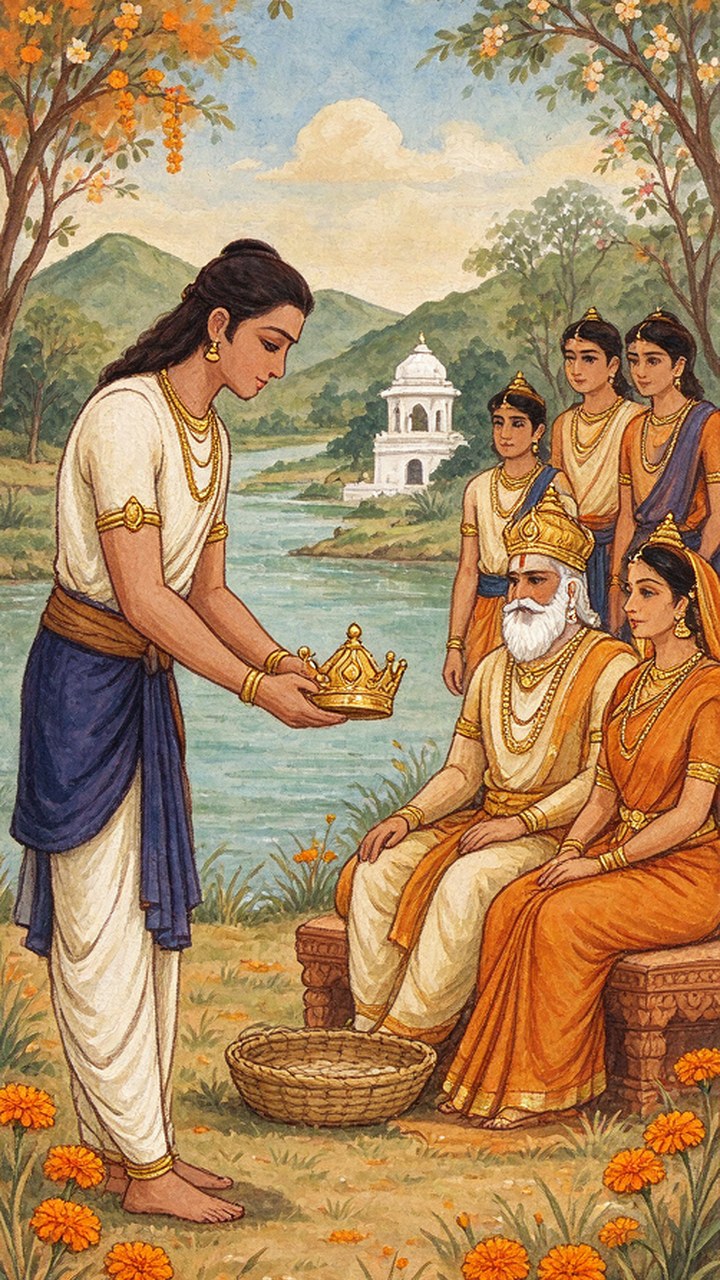
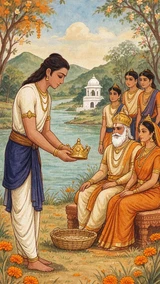
Bhishma’s vow changes succession. Two branches grow up together, and their rivalry turns dangerous.
भीष्म की प्रतिज्ञा उत्तराधिकार बदलती है। साथ बड़े हुए परिवार की दो शाखाओं की होड़ खतरनाक हो जाती है।
Films in this chapterइस अध्याय की फ़िल्में
-
Indraprastha, dice and exile
इंद्रप्रस्थ, द्यूत और वनवास
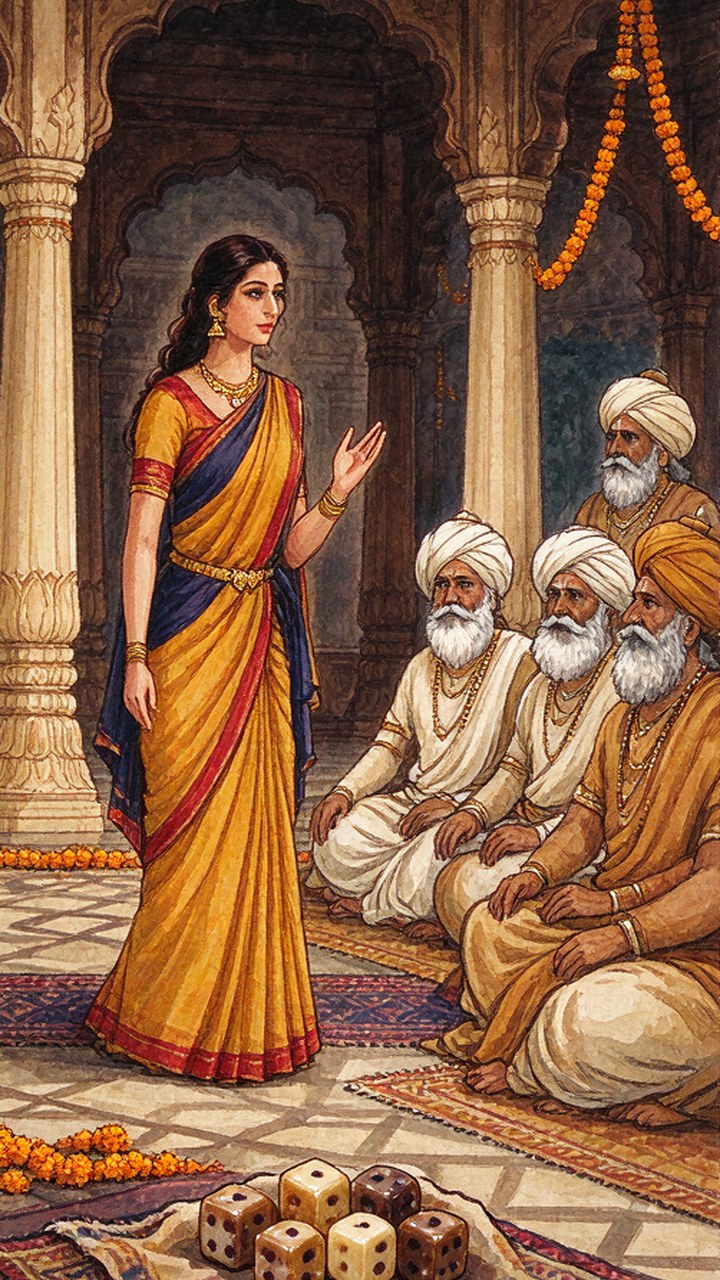
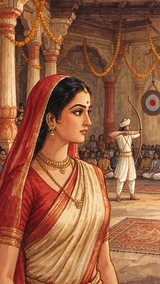
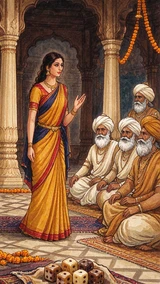
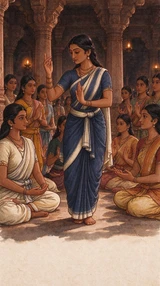
The Pandavas build a capital. Draupadi challenges the wager, and the family must live away from court.
पांडव राजधानी बसाते हैं। द्रौपदी दाँव पर सवाल उठाती हैं और परिवार को सभा से दूर रहना पड़ता है।
-
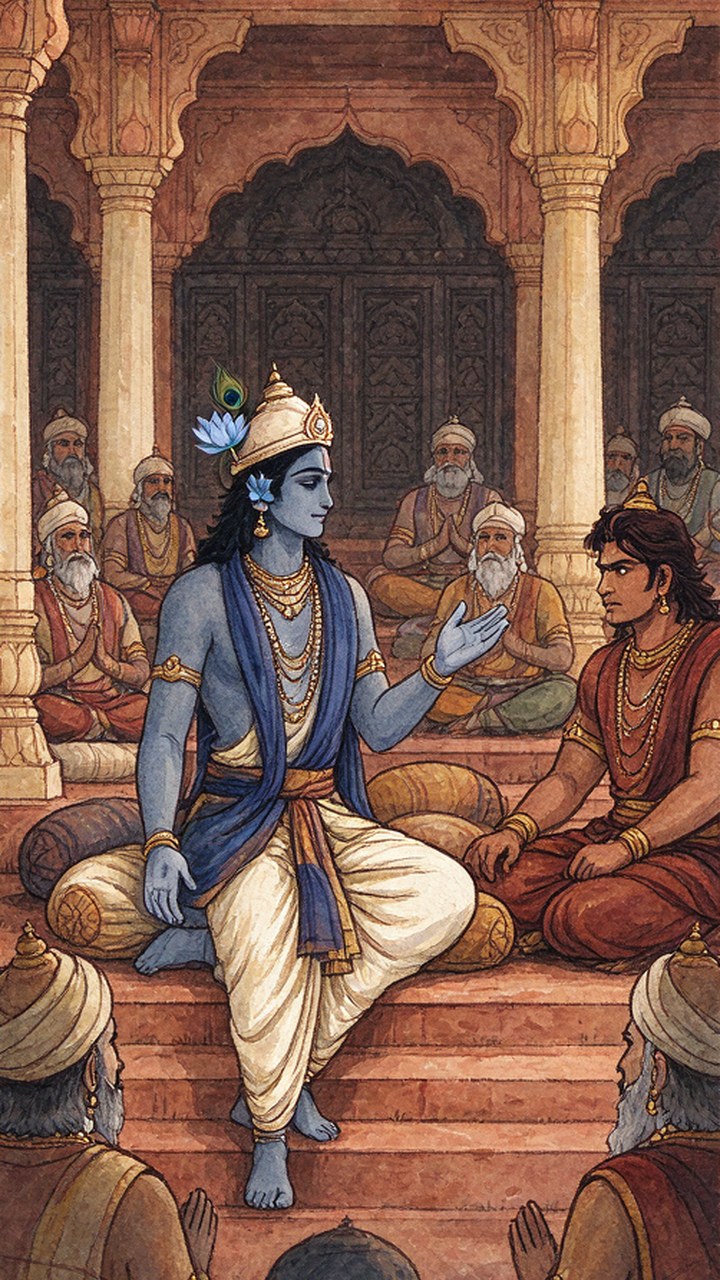
Peace talks and the war
शांति प्रयास और युद्ध
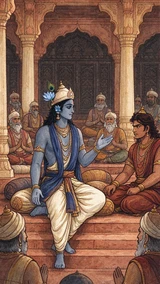
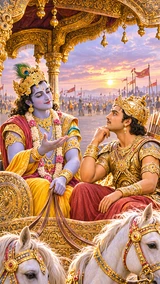
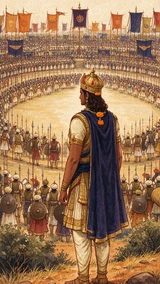
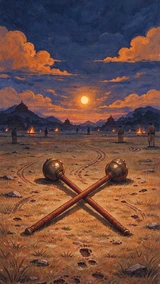
Krishna tries to prevent war. Arjuna questions his duty, and the battlefield decisions come at a cost.
कृष्ण युद्ध टालने की कोशिश करते हैं। अर्जुन कर्तव्य पर प्रश्न करते हैं और युद्ध के निर्णयों की कीमत सामने आती है।
Films in this chapterइस अध्याय की फ़िल्में
-
Victory, grief and the final journey
विजय, शोक और अंतिम यात्रा
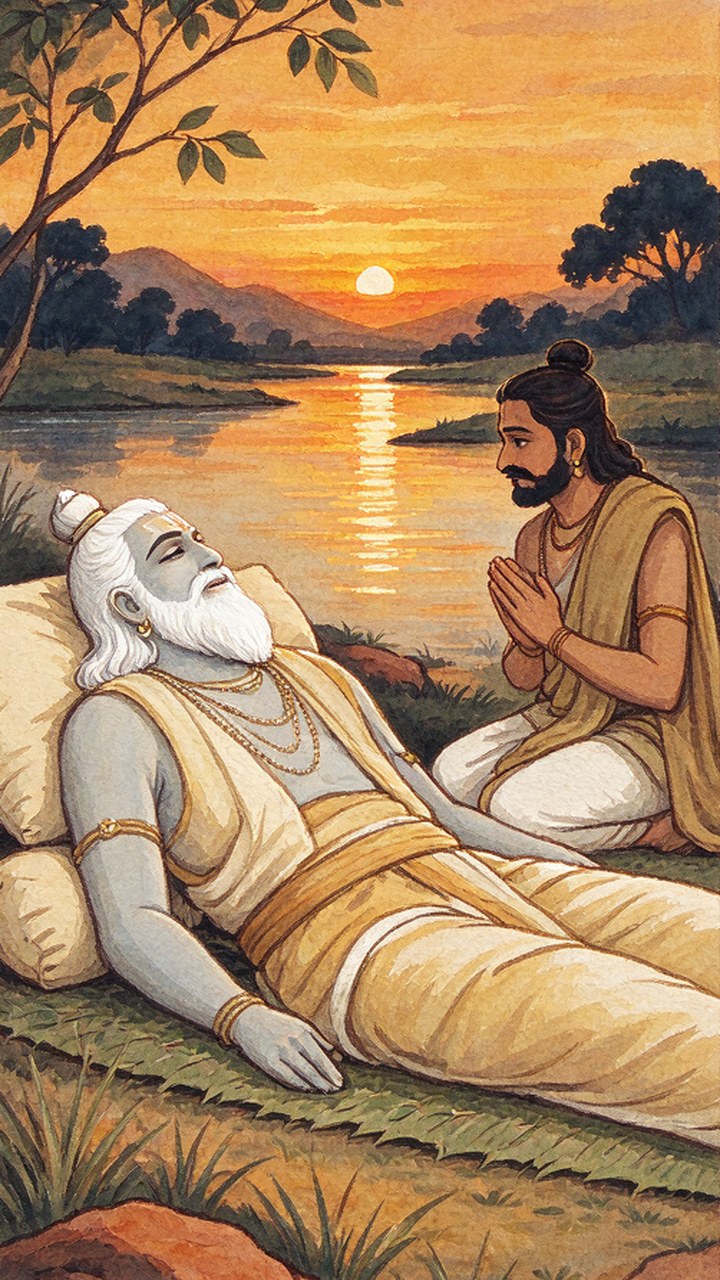
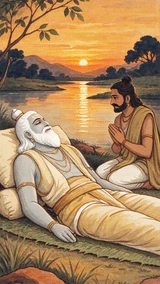
Karna’s secret changes the survivors’ grief. Yudhishthira must govern and eventually let go of the throne.
कर्ण का रहस्य बचे लोगों का शोक बदल देता है। युधिष्ठिर राज्य सँभालते हैं और एक दिन उसे छोड़ते हैं।
Films in this chapterइस अध्याय की फ़िल्में
Connected stories
जुड़ी कथाएँ
Explore earlier events, stories told alongside or within the epic, and what followed. Open any story to find its illustrated reading.
पहले की घटनाएँ, महाकाव्य के साथ या उसके भीतर कही गई कथाएँ और आगे की घटनाएँ खोजें। सचित्र पाठ के लिए कोई भी कथा खोलें।
Prequels
पूर्वकथाएँ
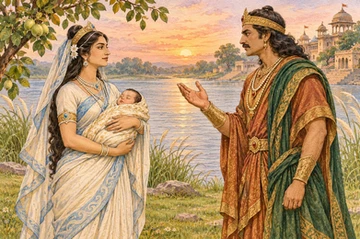 Shantanu, Ganga and young Devavrataशान्तनु, गंगा और युवा देवव्रतThe life behind Bhishma’s vow.भीष्म की प्रतिज्ञा से पहले का जीवन।
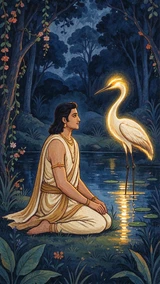
King Shantanu and Ganga have a son, Devavrata. Ganga raises the boy away from Shantanu’s court and later returns him as a trained young prince. As Devavrata grows into the expected heir, a later decision to step aside carries real weight. He will become known as Bhishma after a vow that changes who can inherit the Kuru throne.
राजा शान्तनु और गंगा के पुत्र देवव्रत हैं। गंगा उन्हें शान्तनु की सभा से दूर पालती हैं और शिक्षा पूरी होने पर उन्हें वापस लाती हैं। उत्तराधिकारी माने जाने वाले देवव्रत जब अपने अधिकार से हटते हैं, तो निर्णय का बड़ा असर होता है। कुरु सिंहासन का उत्तराधिकार बदलने वाली प्रतिज्ञा के बाद वे भीष्म कहलाते हैं।
Moralसीख · A promise about our own future can also change the future of people we have yet to meet.अपने भविष्य पर किया वचन उन लोगों का भविष्य भी बदल सकता है जिनसे हम अभी मिले नहीं हैं।
Sourceस्रोत · Mahābhārata · Ādi Parva, Shantanu and Ganga
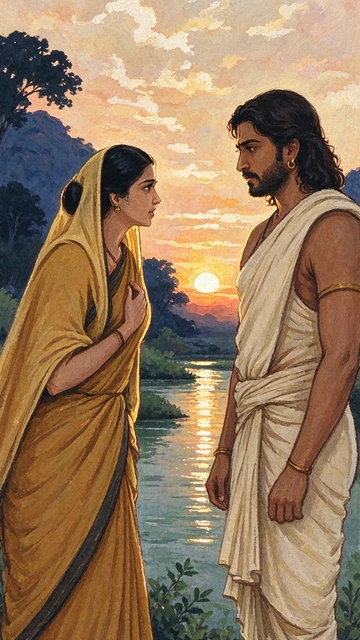 Kunti and Karna before the warयुद्ध से पहले कुंती और कर्णA birth secret that returns after decades.जन्म का एक रहस्य जो वर्षों बाद लौटता है।
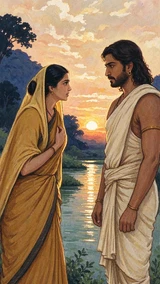
As a young woman, Kunti receives a mantra from the sage Durvasa. She invokes the sun deity, and Karna is born. Fearing how people will judge her, she sets the baby afloat. Adhiratha and Radha raise him. He grows up in the family that cared for him. Before Kurukshetra, Kunti tells him that the Pandava brothers he is preparing to fight are also his brothers by birth.
युवा कुंती को ऋषि दुर्वासा से मन्त्र मिलता है। वह सूर्य देव का आह्वान करती हैं और कर्ण का जन्म होता है। समाज के निर्णय के डर से वह शिशु को जल में प्रवाहित करती हैं। अधिरथ और राधा उनका पालन-पोषण करते हैं। कर्ण उसी परिवार में बड़े होते हैं जिसने उन्हें सँभाला। कुरुक्षेत्र से पहले कुंती बताती हैं कि जिन पांडवों से वे लड़ने जा रहे हैं, वे जन्म से उनके भाई भी हैं।
Moralसीख · A person’s life belongs to more than one relationship. A truth told late can complicate years of loyalty.किसी का जीवन एक ही रिश्ते से नहीं बनता। देर से बताया सच वर्षों की निष्ठा को कठिन बना सकता है।
Sourceस्रोत · Mahābhārata · Ādi and Udyoga Parvas
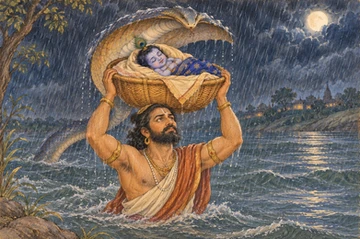 Krishna before the peace missionशांति प्रयास से पहले कृष्णA companion account from Krishna’s devotional stories.कृष्ण की भक्तिपरक परंपरा से जुड़ा प्रसंग।
The Bhāgavata tells how Krishna is taken across the Yamuna as a baby, grows up among the cowherds, and returns to Mathura to confront Kamsa. Later his people make a home in Dvaraka. These stories give first-time readers a way to meet Krishna before they encounter him as Arjuna’s friend, charioteer and a messenger for peace.
भागवत में शिशु कृष्ण को यमुना पार ले जाया जाता है। वह ग्वालों के बीच बड़े होते हैं और फिर कंस का सामना करने मथुरा लौटते हैं। आगे उनके लोग द्वारका को अपना घर बनाते हैं। इन कथाओं से पाठक कृष्ण को अर्जुन के मित्र, सारथी और शांति-दूत के रूप में मिलने से पहले जान सकते हैं।
Moralसीख · Knowing someone’s earlier responsibilities can clarify the role they choose later.किसी की पुरानी जिम्मेदारियाँ जानने से उसकी बाद की भूमिका अधिक स्पष्ट होती है।
Sourceस्रोत · Bhāgavata Purāṇa · Book 10, Krishna’s childhood and early life
Parallel stories
समानांतर कथाएँ
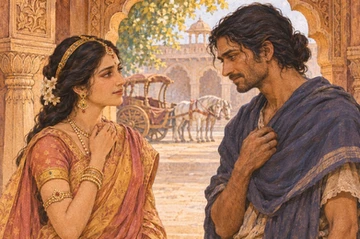 Nala and Damayantiनल और दमयन्तीA story told to Yudhishthira in exile.वनवास में युधिष्ठिर को सुनाई गई कथा।
When Yudhishthira is grieving the loss of his kingdom, the sage Brihadashva tells him of King Nala. Nala too loses his realm at dice and becomes separated from his wife, Damayanti. She searches for him and tests signs of his identity before they reunite. Nala learns how to face the game again and recovers his kingdom. The embedded tale lets the exiled king hear a different response to a predicament he knows.
राज्य खोने के शोक में बैठे युधिष्ठिर को ऋषि बृहदश्व राजा नल की कथा सुनाते हैं। नल भी द्यूत में राज्य हारते हैं और अपनी पत्नी दमयन्ती से बिछुड़ जाते हैं। दमयन्ती उन्हें खोजती हैं और फिर मिलने से पहले उनकी पहचान की पुष्टि करती हैं। नल द्यूत का फिर सामना करने की समझ पाते हैं और राज्य वापस लेते हैं। कथा वनवासी राजा को अपनी जैसी कठिनाई का एक और उत्तर दिखाती है।
Moralसीख · Recovery takes patience, new knowledge and the agency of the people helping us.सुधार के लिए धैर्य, नया ज्ञान और सहायता करने वालों के अपने निर्णय ज़रूरी होते हैं।
Sourceस्रोत · Mahābhārata · Vana Parva, Nalopākhyāna
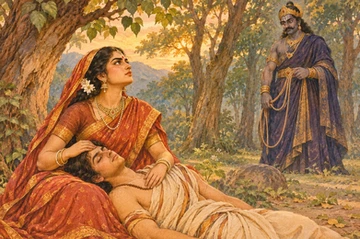 Savitri follows Yamaसावित्री यम के पीछे जाती हैंMarkandeya tells this story during the forest years.मार्कण्डेय यह कथा वनवास के समय सुनाते हैं।
Savitri chooses Satyavan knowing his life is expected to be short. When Yama takes him, she follows and speaks with intelligence and patience. Yama grants her wishes. She asks for a future that cannot come to pass without Satyavan, and Yama restores him. Told within the exile, the story gives listeners another example of someone whose courage shows in the way she speaks and thinks.
सावित्री जानती हैं कि सत्यवान की आयु कम होगी, फिर भी उन्हें चुनती हैं। यम उन्हें ले जाते हैं तो सावित्री पीछे चलती हैं और धैर्य और बुद्धि से बात करती हैं। यम वर देते हैं। वह ऐसा भविष्य माँगती हैं जो सत्यवान के बिना सम्भव नहीं है और यम उन्हें जीवन लौटाते हैं। वनवास के भीतर सुनाई गई कथा दिखाती है कि सोच और वाणी भी साहस हो सकती हैं।
Moralसीख · Persistence and a clear question can matter when force would accomplish little.जहाँ बल से कम काम हो, वहाँ धैर्य और स्पष्ट प्रश्न काम आ सकते हैं।
Sourceस्रोत · Mahābhārata · Vana Parva, Savitri’s story
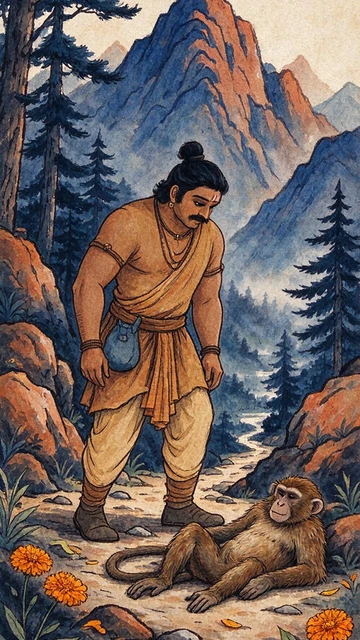 Across the epics · Bhima meets Hanumanदो महाकाव्यों के बीच · भीम और हनुमानA forest detour connects the two epics.वन का अलग प्रसंग दोनों महाकाव्यों को जोड़ता है।
Bhima encounters an old monkey blocking his way and cannot lift its tail. The monkey reveals himself as Hanuman and tells Bhima of Rama’s age. The two are also linked through Vayu, the wind deity. In the middle of exile, the Mahabharata pauses to let a warrior who takes pride in his power learn from someone familiar to readers of the Ramayana.
भीम का रास्ता एक बूढ़ा वानर रोकता है और वे उसकी पूँछ तक नहीं उठा पाते। वानर अपनी पहचान हनुमान के रूप में बताते हैं और राम के युग की बात करते हैं। दोनों का संबंध पवन देव वायु से भी है। वनवास के बीच महाभारत अपने बल पर गर्व करने वाले योद्धा को रामायण में परिचित व्यक्ति से सीखने देता है।
Moralसीख · Strength and humility can belong in the same person.शक्ति और विनम्रता एक ही व्यक्ति में हो सकती हैं।
Sourceस्रोत · Mahābhārata · Vana Parva, Bhima’s encounter with Hanuman
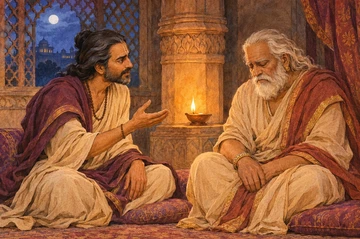 Vidura counsels a sleepless kingविदुर नींद न आने वाले राजा को समझाते हैंA conversation inside the court as peace slips away.शांति का रास्ता बन्द होते समय सभा के भीतर का संवाद।
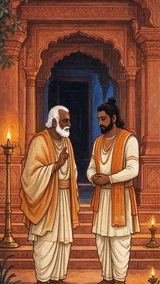
As war approaches, Dhritarashtra is restless and asks Vidura to speak with him. Vidura explains how a ruler’s desires, companions and choices affect the people in his care. He urges restraint and honest judgment. This counsel comes from inside the same household that once ignored warnings about the rivalry. Read it beside Krishna’s peace effort to see how many chances the court has to step back.
युद्ध पास आता है तो धृतराष्ट्र बेचैन होकर विदुर से बात करने को कहते हैं। विदुर समझाते हैं कि राजा की इच्छाएँ, संगति और फैसले उनकी प्रजा को प्रभावित करते हैं। वह संयम और निष्पक्ष निर्णय की सलाह देते हैं। यह सलाह उसी घर से आती है जिसने पहले भी होड़ की चेतावनी अनसुनी की थी। इसे कृष्ण के शांति प्रयास के साथ पढ़कर देखें कि सभा को रुकने के कितने अवसर मिले।
Moralसीख · Good counsel helps only when people with authority are willing to act on it.अच्छी सलाह तभी असर करती है जब अधिकार रखने वाले उस पर काम करें।
Sourceस्रोत · Mahābhārata · Udyoga Parva, Vidura’s counsel
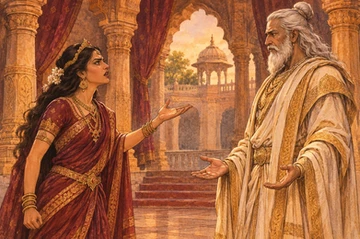 Amba, Shikhandin and Bhishmaअम्बा, शिखंडी और भीष्मAn earlier wrong returns in a decision on the battlefield.एक पुराना अन्याय युद्धभूमि के निर्णय में लौटता है।
Before the fighting, Bhishma recounts Amba’s story and explains why he will not fight Shikhandin, whom he connects with Amba from a previous life. On the battlefield Shikhandin takes the forward position, and Arjuna shoots while Bhishma holds back. The war episode has a past running beneath it. An earlier grievance helps explain a decision that changes who commands the army.
युद्ध से पहले भीष्म अम्बा की कथा कहते हैं और बताते हैं कि वह शिखंडी से युद्ध क्यों नहीं करेंगे। भीष्म शिखंडी को अम्बा के पूर्वजन्म से जोड़ते हैं। युद्धभूमि में शिखंडी आगे रहते हैं और भीष्म के प्रतिरोध न करने पर अर्जुन बाण चलाते हैं। युद्ध की इस घटना के पीछे एक पुराना प्रसंग है। पुराने अन्याय से वह निर्णय समझ आता है जो सेना का नेतृत्व बदल देता है।
Moralसीख · Choices made long ago can continue to shape a conflict that seems new.बहुत पहले के फैसले ऐसे संघर्ष को भी आकार देते हैं जो नया लगता है।
Sourceस्रोत · Mahābhārata · Udyoga and Bhīṣma Parvas
Sequels
आगे की कथाएँ
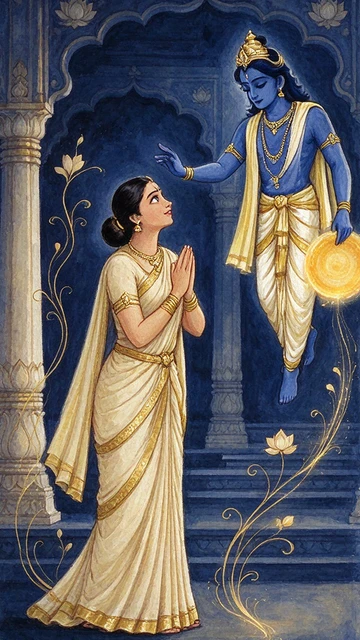 Uttara and the child who survivesउत्तरा और बचने वाला शिशुThe next Kuru generation almost ends before it begins.कुरु वंश की अगली पीढ़ी शुरू होने से पहले संकट में है।
After the armies have stopped fighting, Uttara’s unborn child is threatened by Ashwatthama’s weapon. In the Bhāgavata’s devotional telling, she turns to Krishna for protection. The child survives as Parikshit and later succeeds the Pandavas. The event connects the grief after battle with responsibility for people who were never part of the quarrel.
युद्ध थमने के बाद भी अश्वत्थामा के अस्त्र से उत्तरा के गर्भस्थ शिशु को खतरा है। भागवत की भक्तिपरक कथा में वह कृष्ण से रक्षा माँगती हैं। बालक परीक्षित के रूप में बचता है और आगे पांडवों का उत्तराधिकारी बनता है। यह घटना युद्ध के शोक को उन लोगों की रक्षा से जोड़ती है जो संघर्ष का हिस्सा ही नहीं थे।
Moralसीख · Peace includes protecting the people who live with the consequences of a war they did not choose.शांति का अर्थ उन लोगों की रक्षा भी है जिन्हें ऐसे युद्ध के परिणाम झेलने पड़ते हैं जिसे उन्होंने नहीं चुना।
Sourceस्रोत · Bhāgavata Purāṇa · 1.8, Uttara asks for protection
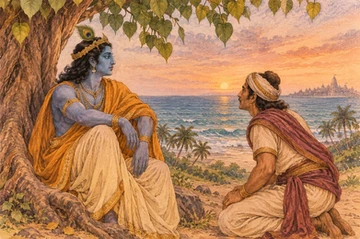 The final days of Dvarakaद्वारका के अंतिम दिनThe epic returns to Krishna’s people after Kurukshetra.कुरुक्षेत्र के बाद कथा फिर कृष्ण के लोगों के पास लौटती है।
In the Mausala Parva, a conflict destroys much of Krishna’s clan. Krishna and Balarama depart from the world. Arjuna goes to Dvaraka and leads survivors away before the city is overtaken by the sea. For the Pandavas, this marks the passing of a generation and leads toward their own decision to leave the kingdom.
मौसल पर्व में एक संघर्ष कृष्ण के कुल के बहुत लोगों का अंत करता है। कृष्ण और बलराम संसार से विदा होते हैं। अर्जुन द्वारका जाकर बचे लोगों को बाहर ले जाते हैं, और नगर समुद्र में डूब जाता है। पांडवों के लिए यह एक पीढ़ी के बीतने की घटना है। इसके बाद वे स्वयं भी राज्य छोड़ने की ओर बढ़ते हैं।
Moralसीख · When a familiar world changes, the people who survive need care and a way forward.जाना-पहचाना संसार बदल जाए तो बचे लोगों को देखभाल और आगे का रास्ता चाहिए।
Sourceस्रोत · Mahābhārata · Mausala Parva
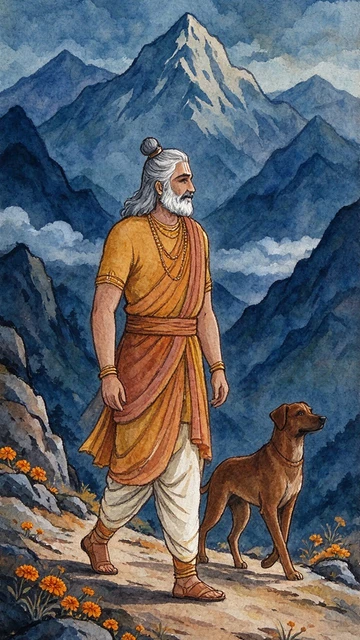 The dog on the last journeyअंतिम यात्रा का कुत्ताParikshit takes the throne, and the elders leave it behind.परीक्षित को राज्य मिलता है और बुज़ुर्ग उसे छोड़ देते हैं।
The Pandavas give the kingdom to Parikshit and set out on a last journey. Yudhishthira continues until a dog is his only companion. When offered a place in heaven on the condition that he leave the dog, he refuses. The dog reveals itself as Dharma. The test shows what the former king values when there is no throne left to defend.
पांडव राज्य परीक्षित को देकर अंतिम यात्रा पर निकलते हैं। आगे युधिष्ठिर के साथ केवल एक कुत्ता रह जाता है। उसे छोड़कर स्वर्ग जाने को कहा जाता है, पर वह मना करते हैं। कुत्ता धर्म का रूप था। परीक्षा दिखाती है कि जब बचाने को सिंहासन भी न रहे, तब पुराने राजा के लिए क्या महत्वपूर्ण है।
Moralसीख · Loyalty shows in how we treat a companion who has no power over us.निष्ठा इस बात से दिखती है कि हम उस साथी के साथ कैसा व्यवहार करते हैं जिसका हम पर कोई अधिकार नहीं है।
Sourceस्रोत · Mahābhārata · Mahāprasthānika Parva
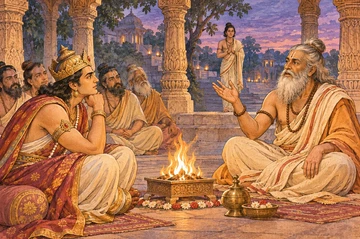 Janamejaya hears his family’s storyजनमेजय अपने परिवार की कथा सुनते हैंThe next generation brings us back to the epic’s opening.अगली पीढ़ी हमें महाकाव्य के आरम्भ तक लौटाती है।
Parikshit’s son Janamejaya seeks revenge after his father dies from Takshaka’s bite. He holds a snake sacrifice, but the sage Astika persuades him to stop. At Janamejaya’s gathering, Vaishampayana tells the story of the Kuru family. The framing tale is set after the war even though readers meet it near the beginning of the Mahabharata.
तक्षक के काटने से पिता परीक्षित की मृत्यु के बाद उनके पुत्र जनमेजय बदला लेना चाहते हैं। वह सर्प यज्ञ करते हैं, पर ऋषि आस्तीक उन्हें रोकने के लिए समझाते हैं। जनमेजय की सभा में वैशम्पायन कुरु परिवार की कथा सुनाते हैं। यह प्रसंग युद्ध के बाद का है, फिर भी पाठक इसे महाभारत के आरम्भ के पास पढ़ते हैं।
Moralसीख · Listening to how a conflict began can help us decide whether to continue it.संघर्ष कैसे शुरू हुआ, यह सुनकर हम निर्णय ले सकते हैं कि उसे आगे बढ़ाना है या नहीं।
Sourceस्रोत · Mahābhārata · Ādi Parva, Āstīka and Janamejaya’s sacrifice